
Oct 5, 2026
This post has two sections:
- Section 1 : For the person who wants to understand how rice is broken down in the body and how it impacts their health and digestion.
- Section 2: For the health professional who wants to help their patients and for anyone else who wants the full mechanism.
Section 1: The rice digestion essentials
When you eat white rice almost none of it makes it to the colon to create waste. How does that happen? It’s because rice is one of the most completely digestible and absorbable foods that exists in the human diet. This is because almost all of the starch from rice is broken down by the mouth and small intestines and is absorbed completely as glucose immediately after. Because this starch break down is so efficient it leaves very little food left over for the bacteria further down in the gut[1, 2]. This is why rice is so interesting for those with microbial overgrowths like SIBO.
When the starch from rice is broken down completely and absorbed so efficiently by the body this leaves little food left over for SIBO microbes, or other microbes to cause bloating. Yes, this means that someone with SIBO will have less bloating with rice and it is considered a safe food.
On the other hand, if you have a more whole-grain rice that brings more fiber to the gut, this fiber, which cannot be broken down by the body. This fiber does provide food for opportunistic microbes in the small intestines which makes bloating is more likely. In other words, white rice causes less bloating compared to whole grain rice where fiber is present and is eaten by microbes that cause you to bloat.
That is exactly why white rice shows up in so many gut-friendly eating plans, from SIBO protocols to the first meals after a stomach bug, where it’s one of the foods in the familiar BRAT diet.
Exceptions do exist. If plain white rice is still causing digestive problems then your ‘digestive fire’ or your body’s ability to digest food is weak and needs to be strengthened. Meaning your digestive organs need help breaking down the food you are eating and this is causing bloating, not SIBO bacteria. Testing how well you do with rice is interestingly enough a way to know whats going on in your intestines.
The goal of this post is to help you understand why rice is such a widely recommended food by looking at its pathway through the digestive tract and how rice can be so gentle on the gut for someone who’s looking for digestive optimization.
Who is this post for?
This post is mainly for people looking for a carbohydrate that is easy to digest and that can support the body’s caloric requirements. These populations will find rice digestion the most useful:
- You have SIBO. In SIBO, bacteria live in the small intestine, where food is still being digested. The goal is to eat carbohydrates your body absorbs before those bacteria can get to them, so they have less to ferment and less gas to make. Rice is the textbook example.
- You have IBS with gas and bloating. The same logic applies: the less fermentable carbohydrate that reaches your gut bacteria, the less gas builds up.
- You bloat after carbohydrates and don’t know why. Carbs are not all digested the same way. Once you see how rice is absorbed, it’s much easier to understand why beans, whole grains, or broccoli behave so differently.
- You’re recovering from a stomach bug. Rice gives you energy while asking very little of a gut that is still healing.
- Your stomach empties slowly (gastroparesis). Soft foods with small particles leave the stomach more easily. In a randomized trial, people with diabetic gastroparesis had fewer symptoms on a small particle diet [3]. Soft, well-cooked starches fit this pattern, and your care team can tailor it to you.
- Your doctor has put you on a low-residue diet. A low-residue diet is a diet where you produce low amounts of poop. These diets are common before a colonoscopy, during an IBD flare, or after bowel surgery. Hospital low-residue diets list white rice as allowed and brown rice as a food to avoid [4].
- You train hard. Rice gives you fast energy and leaves very little behind in your gut during a session.
And if you are a nutrition or medical professional in training this post is also for you!
If you react to plain white rice, read my note under Stop 3 (the duodenum).
Matt’s Note: In my nutrition training in France, we learned the low-residue diet but I never heard of the ‘small particle diet’ until I started researching for this post. Mechanically, it makes a lot of sense: the stomach only releases food once it has been broken into small enough pieces, so food that starts out soft and small gives it less work to do. If your stomach empties slowly, it’s worth asking your care team about.
Rice at each step in digestion:
Here’s the whole route at a glance (Figure 1):
- Cooking: heat and water open up the starch so enzymes can reach it.
- Mouth: chewing breaks rice into small pieces, and an enzyme in saliva, amylase, starts cutting the starch into shorter chains.
- Stomach: the stomach mixes rice into a thick liquid called chyme and releases it gradually, in small amounts, into the first part of the small intestine called the duodenum.
- Duodenum: the pancreas that is connected to this section of the small intestine, adds more amylase to the chyme. Amylase breaks down the starch into even small pieces.
- Small intestine wall: enzymes on the wall grab the very small starch pieces and break them down into glucose, and the glucose is absorbed right there into the blood stream.
- Liver and blood: once the glucose is in the blood stream it goes to the liver first, then to your muscles for energy, with insulin directing where the glucose goes.
- Colon: almost no rice reaches the colon, so gut bacteria get very little to ferment.
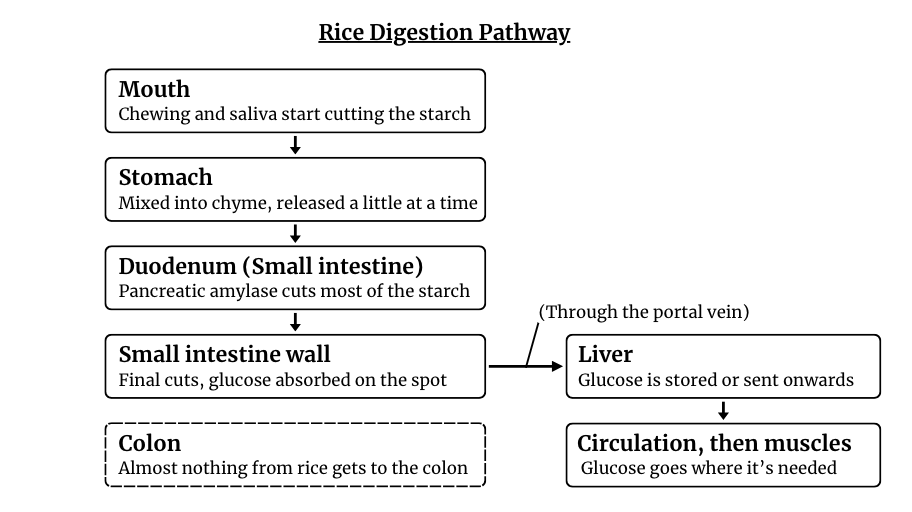
Figure 1. The path of a spoonful of rice. Starch is cut down in the mouth, stomach, and duodenum, absorbed as glucose at the small intestine wall, and sent to the liver. Almost nothing from the rice reaches the colon.
Why rice is easy on your gut
Rice works so well because almost all of it is used up before it reaches your gut bacteria. Three things make that happen:
- It’s digested early. Most of the starch in rice is broken down and absorbed in the first part of the small intestine, so very little travels further down [1, 2].
- Your body gets there before opportunistic microbes. The last step of digestion and the absorption of glucose happen in the same spot, on the wall of your small intestine, so there’s very little free sugar left over for microbes to pick up.
- There’s almost nothing for bacteria to ferment. White rice has very little fiber, and fiber is the part of a carbohydrate your body can’t digest but bacteria can.
Matt’s Note: If you have SIBO, this is exactly why I start with rice. The bacteria behind your bloating live in the small intestine, and rice is absorbed before they can get much of it. Less food for them means less gas, and less gas means less bloating. Rice won’t clear SIBO on its own, but it gives your gut a calm base to work from.
How to use this at the table
- Choose plain white rice, freshly cooked. It’s the most completely absorbed version. Brown rice keeps its bran, which adds fiber that bacteria can ferment. Try a food experiment with only rice and observe your digestion with curiosity. How did one food affect your body?
- Chew it well. The smaller the pieces, the less work for the rest of your gut.
- Pair it with lean protein. Rice with chicken, fish, or eggs makes a meal that’s easy to digest. Go light on added fat if your stomach feels slow, since fat slows stomach emptying and keeps the stomach fuller, longer.
- If you have SIBO, space your meals 4 to 5 hours apart. This gives your gut time to finish one meal and run its cleaning wave before the next one arrives (Section 2, Stop 2).
- Potatoes are a close second. Peeled, freshly cooked potato is also easy to digest, though a little more of it reaches gut bacteria than rice does [1].
- Bread and pasta behave differently. Part of the starch in wheat flour escapes digestion in healthy people [5], and wheat also contains fructans, a carbohydrate your body can’t digest but gut bacteria ferment easily. In a healthy gut that has physically strong digestive organs, these carbohydrates are not a problem.
Caution. If you have diabetes or pre-diabetes, or take medication that lowers blood sugar, talk to your doctor before making rice a large part of your meals. Rice raises blood sugar fairly quickly, so portion size and what you eat with it matter more for you.
Matt’s Note: Rice is the easiest starch I can give someone. If bloating comes with greasy, pale, or floating stools, or with weight loss you can’t explain, see your doctor first. Those are signs of malabsorption that need medical testing before any diet change.
Where to go from here
- Watch the video: in SIBO? Start Here, I draw out carbohydrate digestion on the whiteboard and explain which carbs work for SIBO and which ones feed the overgrowth.
- Read the next post in this series: how chicken is digested. [Coming soon]
- Work with me: if you’d like help figuring out what your gut needs, you can book a consultation at cressdietetics.com.
- Want the full mechanism? Keep reading.
Section 2: Going further for health professionals
This section walks through each stop in Figure 1 at full depth, with the enzymes, transporters, and evidence behind Section 1. Section 1 shows how I explain this to clients; this is the physiology underneath it.
What rice is made of
Cooked white rice is mostly starch and water. Per 100 g (about 2/3 cup), it has about 28 g of carbohydrate, almost all of it starch, with about 3 g of protein and less than 1 g each of fat and fiber [6]. Milling removes the bran and germ, which hold most of the grain’s fiber and fat.
Starch is a glucose polymer that comes in two forms. Amylose is mostly linear, with glucose units joined by alpha-1,4 glycosidic bonds. Amylopectin is highly branched, with an alpha-1,6 bond at each branch point. Only monosaccharides cross the enterocyte membrane, so starch digestion is a sequence of hydrolysis steps that has to end in free glucose.
Gelatinization. In raw rice, starch sits in semicrystalline granules that amylase penetrates poorly. Heating in water lets the granules hydrate, swell, and lose their crystalline order, which exposes the glycosidic bonds to enzymes. This section assumes freshly cooked rice. On cooling, retrogradation forms resistant starch which can cause bloating and SIBO bacteria flares, for this post only fresh rice digestion is outlined.
Stop 1: the mouth
Mastication reduces particle size, which increases the surface available to enzymes, and forms the bolus. I use the swallowed corn kernel with clients: an unpierced kernel comes out looking exactly the same, which makes the point that digestion depends on that first mechanical step.
Salivary alpha-amylase hydrolyzes internal alpha-1,4 bonds and produces three main products:
- Maltose: two glucose units.
- Maltotriose: three glucose units.
- Alpha-limit dextrins: branched fragments carrying the alpha-1,6 bonds that amylase can’t cleave.
Amylase releases very little free glucose. The faint sweetness of rice chewed slowly for a minute is maltose being produced in the mouth, and it’s a simple demonstration to use with patients.
Stop 2: the stomach
The stomach secretes no starch-digesting enzyme. Salivary amylase from the mouth is destroyed by the stomach acid, but only once the acid reaches the inside of the swallowed food, so starch breakdown keeps going for a while before it temporarily halts.
Stomach acid and pepsin work on any protein from the meal. In vitro models of bread digestion, salivary amylase hydrolyzed most of the starch within the first 30 minutes of the gastric phase [7]. The gastric contribution for rice in vivo hasn’t been quantified, but the mechanism is the same.
Antral contractions happen about three times per minute and this is how the stomach takes your chewed food from the mouth and physically churns it to make it into something more emulsified and liquid. This is the rock tumbler action I described in my SIBO video on youtube.
Matt’s note: When you think about it, if you were to chew food in your mouth and spit it out and you compare that with vomit, you will see that vomit is much more liquid. This liquifying action is the combination of acid from the stomach breaking down protein and the mechanical action of the stomach squeezing and mechanically breaking down other foods.
Duodenal feedback sets the pace. Nutrient sensing in the duodenum slows gastric emptying as the carbohydrate load rises. With glucose drinks, delivery held at about 2 kcal per minute across concentrations [8], so glucose reaches the absorptive surface spread out over hours.
Emptying times for rice meals in healthy adults:
- A 267 kcal steamed rice and egg meal: median half-emptying time of about 70 minutes on scintigraphy [9].
- A 536 kcal mixed rice bowl with meat, egg, vegetables, and sesame oil: complete emptying at about 6 hours on average by serial ultrasound [10].
- The standard scintigraphy test meal: less than 10% retained at 4 hours is normal [11].
Fat and protein slow emptying, and larger meals take longer.
Matt’s Note: In my SIBO work I space meals 4 to 5 hours apart. The migrating motor complex (MMC) only returns once the gut has switched from the fed to the fasting pattern, even a small snack can interrupt this cleansing, sweeping action. Also the gurgling when you are hungry is the MMC acting and migrating your food down the GI tract. A moderate meal of rice and lean protein clears the stomach well within that window, which makes it a convenient recommended meal for a GI impaired individual.
If the meal spacing causes worse symptoms, then there is likely a problem with the volume of food in the meal and this would lean more towards a POTS or dysautonomia type of approach where smaller more frequent meals are preferred. Yes, in these situations there is usually dysbiosis, but the higher priority goes to increasing the (weak) organs in the body and their capacity to digest food.
Stop 3: the duodenum
Most luminal starch hydrolysis (aka rice starch breakdown) happens here, and quickly. Acid entering the duodenum triggers secretin, which drives pancreatic bicarbonate secretion (alkaline) and brings the acidic chyme to a near-neutral pH. Amylase and other enzymes cannot work in acidic conditions so the stomach acid must be neutralized for starch digestion to keep going. At the same time, fat and protein in the semi-digested food trigger cholecystokinin (CCK), which drives pancreatic enzyme secretion, including pancreatic alpha-amylase [12]. Carbohydrate is a weak trigger, so a plain rice meal releases little CCK, but nerve signals that start when you see, smell, and taste food also stimulate pancreatic enzyme release, so amylase is still present. Pancreatic amylase is secreted in large amounts, and the remaining starch is quickly cut down to maltose, maltotriose, and alpha-limit dextrins. None of these products can be absorbed yet.
Because healthy people absorb rice so completely, rice has been used as a test substrate for malabsorption. In one study of a 100 g carbohydrate rice meal, healthy controls showed a mean breath hydrogen rise of about 7 ppm, against about 43 ppm in patients with pancreatic disease. Breath hydrogen was highest in patients with bacterial overgrowth [2].
Matt’s Note: When a client reacts to plain white rice, I look upstream before blaming the rice. A reaction to the easiest starch available points toward:
- Reduced enzyme output – meaning digestive organs are not working well and need support with sufficient calories and supporting vitamins and minerals ,
- Altered transit – usually slower. This goes into the above bullet point where the organs are too weak to move the foods at the correct speed through the GI tract.
- Bacteria sitting too high in the small intestine (SIBO) – and it can flag a confounding condition. Steatorrhea or unexplained weight loss alongside it calls for a medical workup before any diet change.
Stop 4: the brush border
Final hydrolysis of disaccharides like maltose happens at the brush border on the wall of your small intestines. This is where the microvillus membrane of the enterocytes is located. Mucosal folds, villi, and microvilli multiply the absorptive surface many times over. This is similar to a bath towel, whose loops hold far more water than a flat sheet could.
Two brush border enzyme complexes finish starch digestion [12]:
- Maltase-glucoamylase cleaves alpha-1,4 bonds from the ends of maltose, maltotriose, and short glucose chains.
- Sucrase-isomaltase also cleaves alpha-1,4 bonds and, through its isomaltase site, the alpha-1,6 branch points of the alpha-limit dextrins.
The brush border enzymes split maltose into two glucose molecules and trim single glucose molecules off the ends of the short chains, so that the enterocyte is holding onto glucose that gets immediately absorbed.
Glucose then crosses the enterocyte in two steps [12]:
- SGLT1 cotransports glucose with sodium across the apical membrane, driven by the sodium gradient that the basolateral sodium-potassium pump maintains.
- GLUT2 carries glucose across the basolateral membrane toward the capillaries.
This sodium coupling is also why oral rehydration solutions combine glucose and salt.
Because hydrolysis and transport sit on the same membrane, glucose is taken up as it’s released, which leaves little free substrate in the lumen. Substrate being free floating sugars or fibers in the gut for opportunistic microbes to feed on. This is the mechanism behind “the body gets there first” before microbes can get to them in Section 1. Most starch is digested and absorbed in the duodenum and proximal jejunum, and the distal small intestine is reserve capacity for a normal rice meal.
Stop 5: the colon
Very little rice starch reaches the colon. The evidence comes from breath hydrogen: human cells don’t produce hydrogen, so breath H2 above fasting levels reflects carbohydrate fermented by gut microbes. When healthy adults ate 100 g of carbohydrate from oats, whole wheat, potatoes, corn, or baked beans, breath hydrogen rose well above fasting levels. Rice produced only a minimal rise [1], and healthy controls in a separate rice meal study produced minimal hydrogen as well [2].
Colonic fermentation of fiber and resistant starch produces short-chain fatty acids that fuel colonocytes, and that remains a normal, healthy role. White rice simply contributes little to it, and other foods in the diet fill that role.
Matt’s Note: This is why rice is the base of Phase 1 in my SIBO work. The aim is carbohydrate that’s absorbed before small intestinal bacteria can ferment it. It shrinks their substrate without starving them completely, so I pair it with work on the client’s digestive capacity. Plain white rice and plain skinless chicken also make a useful tolerance test, each eaten on its own: a client who reacts to both likely has something else going on rather than just SIBO.
After absorption: blood sugar
Absorbed glucose drains through the portal vein to the liver. In healthy adults, splanchnic tissues take up roughly a quarter to a third of an oral glucose load, and peripheral tissues, mainly skeletal muscle, take up most of the remainder [13].
Rising glucose triggers insulin release, and insulin:
- stimulates GLUT4-mediated glucose uptake in muscle and adipose tissue;
- promotes glycogen synthesis in liver and muscle;
- suppresses hepatic glucose output.
Because white rice is digested and absorbed quickly, it produces a relatively fast glycemic rise. Mixed meals slow that rise through gastric emptying (Stop 2), which is the mechanism behind the pairing advice in Section 1.
Insulin sensitivity. With reduced insulin sensitivity, more insulin is needed to clear the same glucose load, and postprandial glucose stays elevated for longer. Contraction-mediated glucose uptake in muscle doesn’t depend on insulin, and regular training improves insulin sensitivity, so movement is a direct lever for patients with blood sugar concerns.
Potatoes and wheat
Potato starch follows the same pathway. In the breath hydrogen comparison, though, potato carbohydrate raised breath hydrogen more than rice did, so a little more of it reaches the colon [1]. The reason hasn’t been established. All-purpose wheat flour is a clearer case: part of its starch escapes small intestinal absorption in healthy people [5], and wheat also contains fructans, which human enzymes can’t hydrolyze.
Working together
If you’re a dietitian, doctor, other health professional, or a potential client you can reach me, Matthew Cress, through the contact forms on my website.
References
- Levitt MD, Hirsh P, Fetzer CA, Sheahan M, Levine AS. H2 excretion after ingestion of complex carbohydrates. Gastroenterology. 1987;92(2):383-389. Link
- Kerlin P, Wong L, Harris B, Capra S. Rice flour, breath hydrogen, and malabsorption. Gastroenterology. 1984;87(3):578-585. Link
- Olausson EA, Störsrud S, Grundin H, Isaksson M, Attvall S, Simrén M. A small particle size diet reduces upper gastrointestinal symptoms in patients with diabetic gastroparesis: a randomized controlled trial. Am J Gastroenterol. 2014;109(3):375-385.
- University Hospitals Sussex NHS Foundation Trust. Low residue diet: patient information for colonoscopy. Link
- Anderson IH, Levine AS, Levitt MD. Incomplete absorption of the carbohydrate in all-purpose wheat flour. N Engl J Med. 1981;304(15):891-892.
- U.S. Department of Agriculture. FoodData Central: rice, white, long-grain, regular, enriched, cooked. Link
- Freitas D, Le Feunteun S, Panouillé M, Souchon I. The important role of salivary α-amylase in the gastric digestion of wheat bread starch. Food Funct. 2018;9(1):200-208. Link
- Brener W, Hendrix TR, McHugh PR. Regulation of the gastric emptying of glucose. Gastroenterology. 1983;85(1):76-82. Link
- Normal solid gastric emptying values measured by scintigraphy using Asian-style meal: a multicenter study in healthy volunteers. J Neurogastroenterol Motil. 2014. PMID 24948129. Link
- Evaluation of gastric emptying time of a rice-based meal using serial sonography. 2019. PMID 31781625. Link
- Abell TL, Camilleri M, Donohoe K, et al. Consensus recommendations for gastric emptying scintigraphy. Am J Gastroenterol. 2008;103(3):753-763.
- Goodman BE. Insights into digestion and absorption of major nutrients in humans. Adv Physiol Educ. 2010;34(2):44-53.
- Katz LD, Glickman MG, Rapoport S, Ferrannini E, DeFronzo RA. Splanchnic and peripheral disposal of oral glucose in man. Diabetes. 1983;32(7):675-679. Link
Pingback: How Chicken Is Digested: For People with Digestive Concerns and Health Practitioners – Cress Dietetics