
This Study (PDF) Probiotics: The Marvelous Factor and Health Benefits is a fantastic presentation on the benefits of probiotics and how they can positively influence our health.
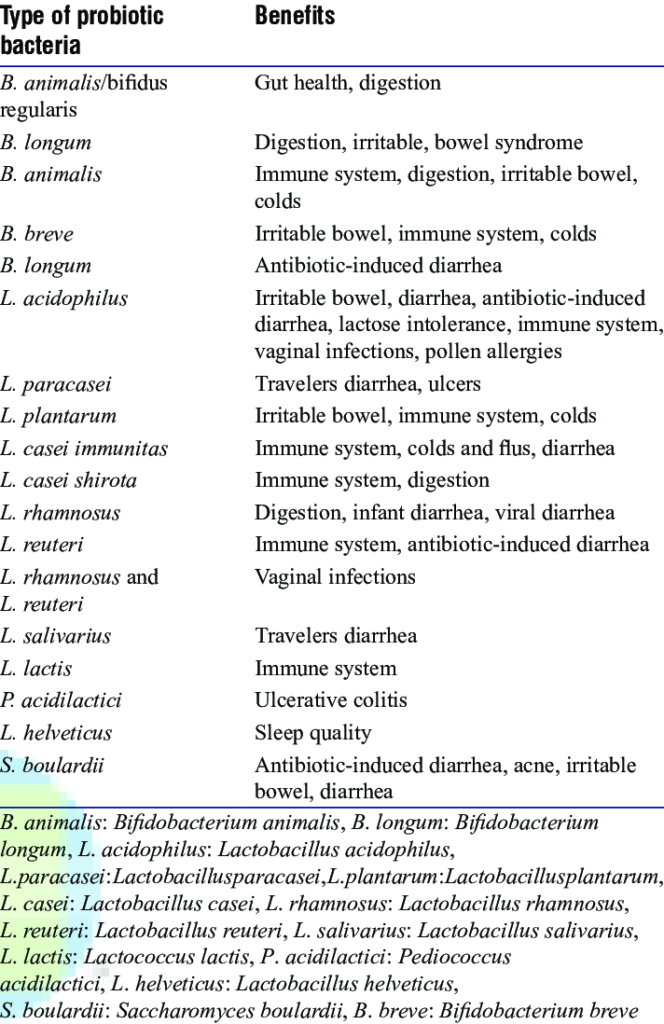
Looking at table 1 below, it outlines the health benefits of various microbes. But you may be asking yourself:
- Where can we naturally find these microbes?
- How can we get them into our own microbiome?
- Should I buy a probiotic?
The information in the table is great, but not very helpful on a practical level. This is why I have made some updates to the table to make it more complete for the reader looking to amplify the benefits from the microbes listed.
Some features of bacterial species as probiotics | Download Table
Matt’s Updated Table
| Type of Probiotic Bacteria | Benefits | Preferred Temp (°C) | Preferred Temp (°F) | Typical Food Source(specifics given below) |
| B. animalis/bifidus regularis | Gut health, digestion | 35-42°C | 95-108°F | Yogurts, milk kefir, and ‘fortified drinks’ |
| B. longum | Digestion, irritable bowel syndrome | 30-37°C | 86-99°F | Fermented soy products like natto or miso. Fermented dairy products |
| B. animalis | Immune system, digestion, irritable bowel, colds | 35-42°C | 95-108°F | Raw cheeses, probiotic yogurts (like DanActive). |
| B. breve | Irritable bowel, immune system, colds | 30-37°C | 86-99°F | Kimchi and yogurts. |
| L. acidophilus | Diarrhea, antibiotic-induced diarrhea, lactose intolerance | 35-37°C | 95-99°F | Sauerkraut, other lacto-fermented vegetables, raw soy fermented |
| L. paracasei | Travelers diarrhea, ulcers | 37-42°C | 98.6-108°F | Raw cheeses and miso. |
| L. plantarum | Irritable bowel, immune system, colds | 30-37°C | 86-99°F | Lacto-fermented vegetables, kimchi, sourdough bread, and raw cheeses. |
| L. casei immunitas | Immune system, colds and flus, diarrhea | 30-40°C | 86-104°F | Milk kefir, probiotic yogurt, fermented butter, and buttermilk. |
| L. casei shirota | Immune system, digestion | 30-40°C | 86-104°F | Raw cheeses, kombucha, |
| L. rhamnosus | Digestion, infant diarrhea, viral diarrhea | 37-42°C | 98.6-108°F | Yogurts, raw buttermilk, and soy drinks. |
| L. reuteri | Immune system, antibiotic-induced diarrhea | 37-42°C | 98.6-108°F | Milk kefir, sourdough bread, cheeses, and fermented fish like surströmming. |
| L. salivarius | Travelers diarrhea | 30-37°C | 86-99°F | Fermented vegetables, kimchi, milk kefir. |
| L. lactis | Immune system | 30-37°C | 86-99°F | Raw buttermilk, yogurt, and cheeses. |
| P. acidilactici | Ulcerative colitis | 30-40°C | 86-104°F | Fermented sausages, fermented soy, and unpasteurized miso. |
| L. helveticus | Sleep quality | 37-45°C | 98.6-113°F | Raw cheeses and yogurts. |
| S. boulardii | Antibiotic-induced diarrhea, acne, irritable bowel, diarrhea | 35-37°C | 95-99°F | All cultured dairy, raw fruit skins, kombucha, and probiotic supplements. |
Determining preferred temperature ranges
The preferred metabolism and growth conditions of a microbe can often be predicted by looking at its taxonomic classification (illustrated below). Using BacDive, the worldwide largest database for standardized bacterial information, you can find resources on practically any microbe. This is the source I used for determining the preferred temperature ranges in the table above.
That being said, there are tricks we can use to help make this easier. For example, looking at a microbe’s genus will usually help us determine how the microbe likes to eat and survive.
L. Reuteri Classification example
Source Link https://bacdive.dsmz.de/strain/6502
| Domain | Bacteria | |
| Phylum | Bacillota | |
| Class | Bacilli | |
| Order | Lactobacillales | |
| Family | Lactobacillaceae | |
| HERE | Genus | Limosilactobacillus |
| Species | Limosilactobacillus reuteri | |
| Full Scientific Name (LPSN) | Limosilactobacillus reuteri (Kandler et al. 1982) Zheng et al. 2020 |
The same link will also provide the individual studies and relevant information about the microbe of interest.
Probiotic Bacteria and Specific Food Sources
You can absolutely introduce a probiotic for added certainty but eating the foods with these bacteria is the correct nutritional protocol for influencing the gut microbiome.
- Bifidobacterium animalis (B. animalis) /bifidus regularis
- Specific Foods: Yogurt brands with live and active cultures (e.g., Activia), fermented milk products such as kefir, and fortified probiotic drinks.
- B. longum
- Specific Foods: Fermented soy products like natto or miso, dairy products such as plain yogurt with “B. longum” listed on the label.
- B. animalis – Think animal foods
- Specific Foods: Mainly found in raw cheese varieties, including Gouda and cheddar. Also available in probiotic yogurts like DanActive or other ‘fortified’ dairy products.
- B. breve
- Specific Foods: Kimchi, yogurt varieties like Greek or Icelandic yogurt like Skyr (B. breve may be on the label)
- L. acidophilus
- Specific Foods: Sauerkraut, other lacto-fermented vegetables, raw fermented soy products like tempeh and some fermented dairy product with L. acidophilus on the label.
- L. paracasei
- Specific Foods: Practically all cheeses. Soft cheeses like Brie and cheddar made with live cultures, fermented milk drinks like Yakult, and unpasteurized miso.
- L. plantarum
- Specific Foods: Fermented vegetables such as sauerkraut, pickles (not vinegar-based), kimchi, and sourdough bread. Also present in olive brine and certain raw cheeses.
- L. casei immunitas
- Specific Foods: Kefir, probiotic yogurt, fermented butter, and buttermilk. Found in fortified probiotic drinks like Yakult or Actimel.
- L. casei shirota
- Specific Foods: Yakult and similar fermented milk beverages, kombucha, and unpasteurized cheeses made with live cultures.
- L. rhamnosus
- Specific Foods: Yogurts specifically listing L. rhamnosus (e.g., Culturelle brand or homemade yogurt using L. rhamnosus starter), buttermilk, and fermented soy drinks.
- L. reuteri
- Specific Foods: Milk kefir is the number one source of this microbe. Sourdough bread made with L. reuteri-rich starter, and fermented fish such as surströmming. Found in probiotic supplements as well.
- L. salivarius
- Specific Foods: Fermented foods like sauerkraut and kimchi, milk kefir, and unpasteurized lacto-fermented pickles.
- L. lactis
- Specific Foods: Buttermilk, cheeses like cheddar and Gouda, and yogurt with live cultures. Also found in certain raw dairy products.
- P. acidilactici
- Specific Foods: Fermented sausages like salami or chorizo made with starter cultures, fermented soybeans, and unpasteurized miso.
- L. helveticus
- Specific Foods: Swiss cheeses such as Emmental and Gruyère, probiotic yogurts.
- S. boulardii
- Specific Foods: Naturally isolated from an array of dairy products, including milk, yogurt, cream, dahi, cheese and kefir but is also found in raw fruit skins, kombucha, and of course probiotic supplements.
Key Takeaways
There are two main categories to positively influence your gut microbiome. Amplify these two categories for a more robust, diverse, and health-giving microbiome.
- Fermented dairy from raw cheeses, milk kefir, and yogurts.
- Fermented vegetables from lacto-fermentation and kimchi
Matt’s note on Probiotics:
If you are looking to improve your health with probiotics it is important that you keep these concepts in mind.
- A probiotics benefit is diminished in a dehydrated individual. In other words, you must be well hydrated to get the full benefit of a probiotic
- Probiotics never work individually. All probiotics have a synergistic effect in the gut and in the outside world. This is why there is always a mix of microbes in the probiotic supplements that have the best reviews and the foods that have the best health promoting benefits.
- Being physically active positively influences the gut microbiome in more ways than researchers comprehend as of today. Habitual slowness and stagnation in the body is detrimental to the gut microbiome without exception.
- If you have a specific condition that you are wanting help on and you see a common theme in the specific food recommendations that is missing from your diet then take that as a sign to consciously and consistently have that food on a daily basis.
- Homeostasis in the body is very powerful! Weight does not change overnight, muscles aren’t built in a week, and the microbiome does not change with 2-3 probiotic rich meals. To change your microbiome you need to introduce the targeted foods on a daily basis. Large quantities of these foods aren’t necessary but consistency and daily application are the keys to success.
- If you would like help or have questions please ask below or reach out to Matt directly.
(PDF) Probiotics: The Marvelous Factor and Health Benefits Original study table:
Do you have any information on Lactobacillus crispatus?
Thank you